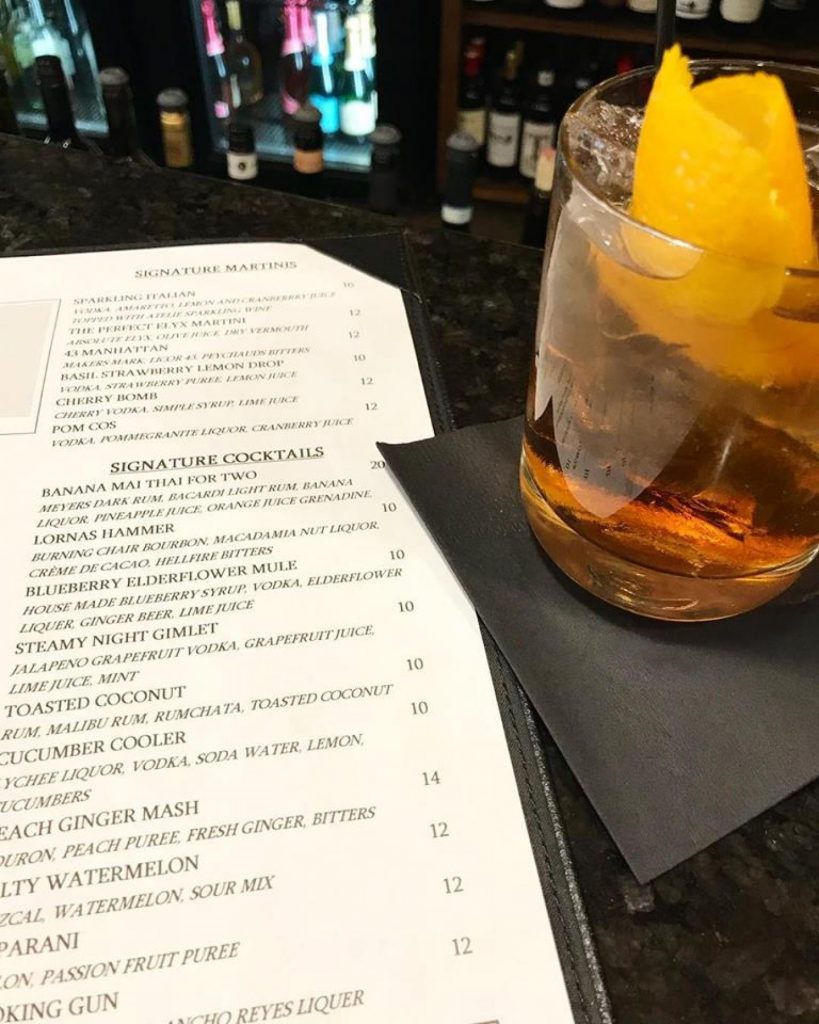
One doesn’t have to get very deep into the craft cocktail culture to encounter the Old Fashioned cocktail. By many accounts its the most popular cocktail in America. The drink harkens back to the original description of a cocktail…spirits, bitters, sugar and water. It’s such a seemingly simple drink to make…and yet…time after time, I encounter this cocktail being made in ways that defy reason. How many of us have wandered into a bar and ordered an Old Fashioned and then watched in horror as the bartender dumps a veritable bushel of neon red cherries and orange slices into a glass and then wields his muddling stick like some barbaric torture device? The unholy morass of crushed fruit is then given a quick dousing of club soda and a dribble of bitters. However, some bartenders, typically in the Midwest are not satisfied with that hellish concoction. There you will often encounter an abomination called the “Wisconsin Old Fashioned”, in which the club soda is replaced or supplemented by an ounce or so of Sprite. How a recipe that calls for a sugar cube moistened with a few dashes of bitters has somehow mutated into a pulpy mess bubbling in carbonated water and high fructose corn syrup is beyond me. The devil was truly tending bar the day the Wisconsin Old Fashioned sprang into some deranged bartender’s brain. To the wretched brew festering in the glass, the bartender then randomly adds between 1 1/4 and 2 3/4 ounces of cheap bourbon and a few ice chips. If the good man is feeling particularly service oriented, he will spear a few more neon cherries and perhaps an orange wheel on a stick and proceed to place the whole infernal mess in front of you with a cheery grin. At that point it takes a steely resolve not to fling the sordid potion back into his face and punch him straight in the mouth. Once the urge to do violence and mayhem has subsided and the rank beverage sits dourly in front of you, what course of action is to be taken? Perhaps a feigned trip to the men’s room that allows you to flee the bar. Quickly studying your phone for an imaginary text requiring your immediate exit? In my view, having been so foolish as to not inquire as to the construction of the drink, the honorable course of action is to choke the foul thing down as a lesson to be eternally vigilant when ordering.
When it comes to Old Fashioneds, I’m old fashioned. I believe there is only one way to make the drink in order for it to be properly called an Old Fashioned. Ordering an Old Fashioned allows you to quickly determine if the bar is committed to craft cocktails or is just a bar. I often administer what I call the Old Fashioned Challenge. I compare the bar’s preparation to the following set of criteria that I believe constitute the proper technique.
1. The drink is made with American whiskey, bourbon or rye. It’s not made with rum or cognac or cooking wine. A fine cocktail can be made using the same other components and a different base spirit. It’s just not an Old Fashioned. I’m completely uncompromising on that point and will say so to any bartender (it’s a great way to provoke a conversation). It requires exactly 2oz of whiskey. It should be measured with a jigger and not a free pour. Free pours are for spring break drinkers, a craft cocktail demands precision. I’m not a proponent of using a super premium whiskey. The whole point of the Old Fashioned and other early cocktail recipes was to improve a rough raw spirit. Taking a Pappy Van Winkle and putting sugar and bitters into it simply defeats the purpose. I like a nice serviceable whiskey, but not a generic grocery store brand. I prefer rye, but find bourbon acceptable as well. 2-4 dashes of Angustura bitters are appropriate. I will accept orange bitters or other house made aromatic bitters, but use of Angustura provides a safe harbor. I’m not a fan of other flavored bitters in an Old Fashioned…they can be used quite effectively in other cocktails of course.
2. Its served in an Old Fashioned glass. However, the drink is not constructed in the glass. A classic mixing glass should be used and then transferred to the proper glass for serving. A long handled bar spoon is used for stirring, not some flimsy plastic wand or straw.
3. The sweetening agent is sugar. I’m fine with the sugar cube method, but recognize that a simple syrup is also effective. However, use of a sugar cube then obligates the bartender to a proper extended stir to make sure the sugar is fully dissolved. Cocktails made with other sweetening agents are fine and in many cases, excellent. They just aren’t Old Fashioned and should not be called such. The amount of sugar to be used is 1 sugar cube or teaspoon. Precisely, not roughly. I recall an evening in Ft Lauderdale where I went to four separate bars on Las Olas Blvd and in each case was greeted with a bar spec calling for an ounce or more of 1:1 simple syrup. After that sugar harvest, I was almost wishing for a Wisconsin Old Fashioned just to change the tune a bit.
4. The drink should be stirred in the mixing glass with ice cubes, but when served the ice should be a large single cube/sphere. If its hand carved, all the better. This controls the further dilution of the drink and has a great look. Branding the top of the ice with the bar logo is a brilliant extra flourish.
5. The only fruit element in the drink is the garnish. An orange peel is traditional, but a lemon peel is also acceptable. The peel should be freshly carved and then the oil expressed into the drink and the inside of the glass then placed in the drink. Flaming the oil is a nice touch, but not crucial. Which now brings us to the question of the maraschino cherry. Obviously any appearance of the dreaded neon cherry is an immediate emergency requiring quick intervention. But, the Luxardo or other fine cherry is a more complex question. My personal view is that no cherry or other fruit is to be involved at any point. The sweetening agent is sugar, using a cherry changes that. If you want a cherry, order a Manhattan. But I’ve seen some good bars use a Luxardo. If it actually goes into the cocktail, I’m going to have a word with the bartender. If its just a garnish, it can safely be removed and perhaps deployed into another drink or simply eaten as a bar snack once the Old Fashioned is done.
6. The drink should be prepared in front of you and the precision and integrity of the bartender’s technique are a fundamental part of the experience at craft cocktail bar.
I typically only have one Old Fashioned at a bar. If its perfectly made, I know that I can proceed further with the bartender to other interesting cocktails. If its not up to measure, I know to leave or retreat to cocktails that don’t demand much precision.
Leave a Reply